
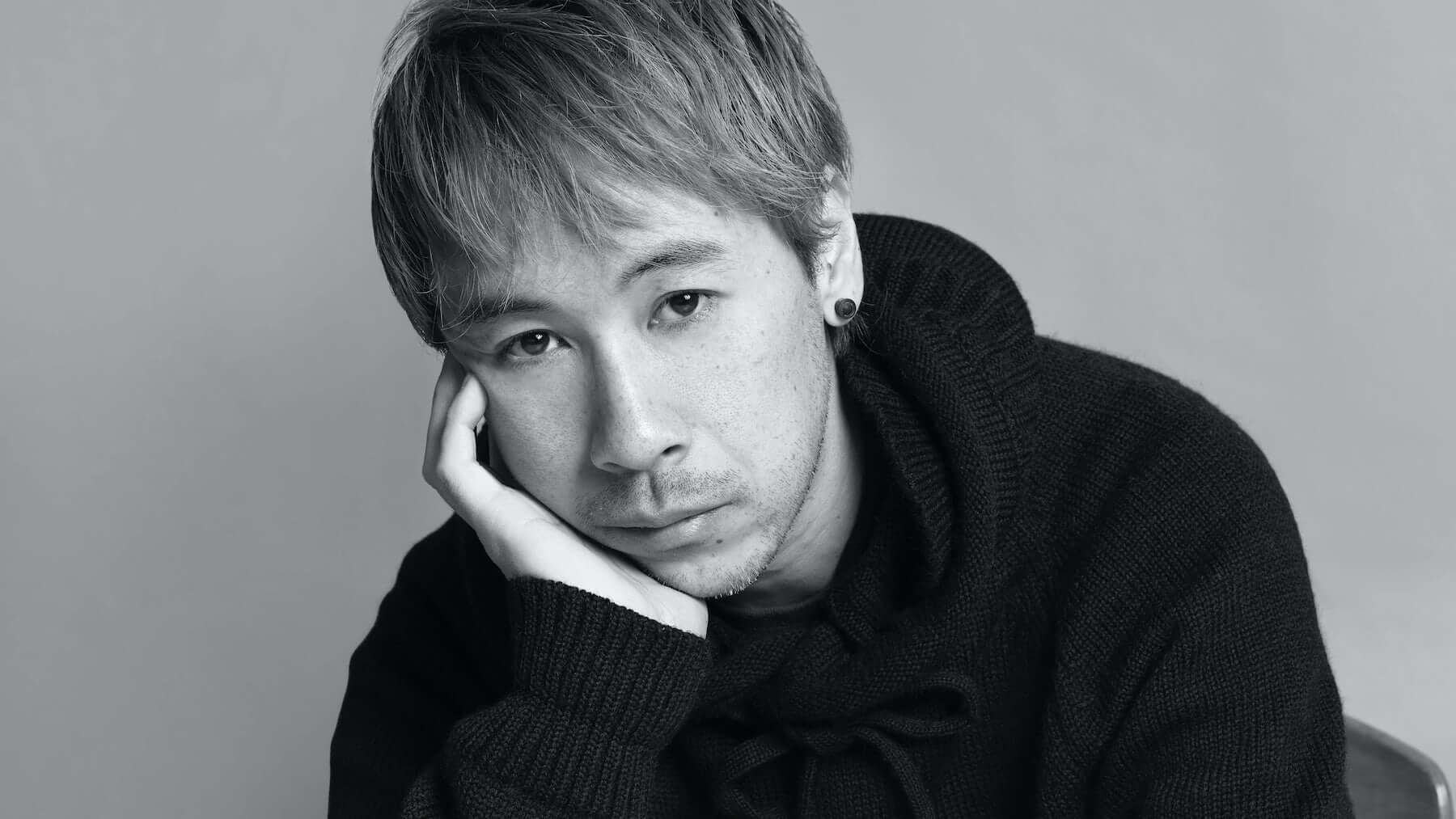
Few names in fashion command the same level of cult reverence as Jun Takahashi. As the mastermind behind the legendary label Undercover, Takahashi successfully achieved the rare feat of fusing raw, underground streetwear with the intricate storytelling of Parisian high couture. Driven by the brand’s bold manifesto, « We make noise, not clothes, » he remains one of the most brilliant and unpredictable deconstructionists in modern design history.
The Punk Rebel of Harajuku
Born in Kiryu, Japan, in 1969, Takahashi’s path to fashion was fueled by subversion. While studying at Tokyo’s prestigious Bunka Fashion College in the late 1980s, he spent his nights as the lead singer of a punk tribute band called the Tokyo Sex Pistols. Heavily inspired by the anti-establishment ethos of Vivienne Westwood, he founded Undercover in 1990.
Alongside his classmate Nigo (who would go on to found BAPE), Takahashi opened the iconic boutique Nowhere in Tokyo’s Harajuku district in 1993. It became ground zero for the « Ura-Harajuku » movement. By the time Takahashi debuted at Paris Fashion Week in 2002—welcomed by fashion royalty like Rei Kawakubo—he had fully evolved from a street-level punk outsider into a meticulous maestro of high fashion.
The Essence of Undercover: Odd, But Beautiful
Takahashi’s art lies in the delicate balance between extreme beauty and a sinister, macabre underside. He is a literary storyteller who builds complex worlds around cinema (frequently referencing Stanley Kubrick), literature, and music.
Moreover, Takahashi’s work relies on deconstruction. He takes classic garments—trench coats, utility gear, and formal tailoring—tears them apart, and reassembles them with frayed edges, exposed stitching, or eerie graphics. His runway shows often feature masked models, capturing a sense of poetic decay and romantic instability.
The Chromatic Psychology of Takahashi
In Takahashi’s universe, color operates as a fluid emotional barometer rather than a mere decorative choice. His collections typically anchor themselves in dense, structural fields of tonal black and industrial charcoal gray, which he uses to evoke the uniform isolation, chaos, and weight of modern urban life.
Yet, his canvas is rarely left in total darkness. He injects jarring chromatic disruptions directly into these somber bases—whether through a flash of vampiric blood red, a sudden slash of acid pink, or a stark neon green graphic. These vibrant disruptions strike against the heavy grays like a visual shout, symbolizing punk energy, human vulnerability, and an active refusal to be swallowed by the surrounding gloom. In his more contemplative periods, he shifts toward organic, muted khakis and soft ecrus, transforming his palette into a meditation on stability and the beautiful decay of time.
A Legacy of Perpetual Influence
Decades after his debut, Jun Takahashi’s influence remains absolute. He was one of the earliest pioneers to bridge the gap between luxury fashion and global sportswear, a concept that dominates the industry today. His long-running Nike x Undercover (Gyakusou) running line completely redefined technical activewear, while his massive collaborations with Supreme proved his permanent grip on modern youth culture. By turning fashion into an exploration of culture, music, and human vulnerability, Takahashi laid the blueprint for every modern designer who dares to mix the grit of the streets with the poetry of the runway.
Image Source: The Buisness of Fashion